Welcome to Sullivan's Island, SC
Sullivan's Island is one of those rare places that manages to feel both worlds away and minutes from everything. If you're considering a move to this barrier island at the mouth of Charleston Harbor, this guide walks you through what daily life actually looks like here, what the real estate market demands of buyers, and the local rules and realities that shape every transaction on the island. We've structured it so you can read straight through or jump to the section that matters most to your decision.
Living on Sullivan's Island: An Overview
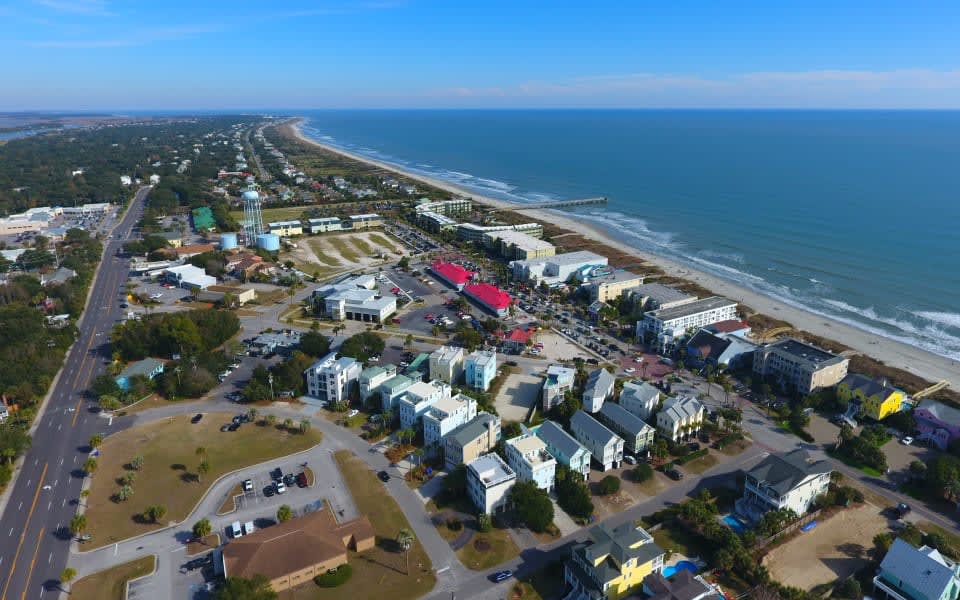
Sullivan's Island is a 3.5-mile barrier island guarding the entrance to Charleston Harbor, home to a tight community of just over 2,000 full-time residents. What sets it apart from most beach destinations is restraint. There are no high-rise condos, no hotel chains, and no neon-lit boardwalk. The island has deliberately chosen to stay small, residential, and quiet, and that decision shapes everything from the streetscape to the price per square foot.
Daily life moves at a golf-cart pace, literally. The flat, low-speed streets mean most residents get to dinner, the beach, or the elementary school by bike, cart, or on foot. Beach access happens through a series of numbered paths called "Stations" — Station 18, Station 22, and so on — a holdover from the trolley line that once ran the length of the island. Middle Street serves as the social heart, lined with a surprisingly serious collection of restaurants and a handful of beloved local pubs.
The trade-off for all this seclusion is remarkably little. The Ben Sawyer Bridge puts you in Mount Pleasant within minutes, and downtown Charleston is a 15-to-20-minute drive over the Ravenel Bridge. Residents get genuine island quiet without giving up world-class hospitals, King Street shopping, or the airport. For families, the draw is sharpened by safety, a real neighborly culture, and an exceptional oceanfront elementary school. It's a place people don't just move to — they tend to stay.
The Sullivan's Island Real Estate Market
Sullivan's Island operates as one of the highest-barrier luxury markets in the Southeast, and the reasons are structural rather than cyclical. The island is geographically fixed, strictly zoned for single-family homes, and physically incapable of adding density. When supply cannot grow and demand stays strong, prices hold their ground. After the frenzied pandemic-era run-up, the market has settled into a stable, luxury-driven equilibrium rather than cooling off.
Here's the current landscape at a glance:
| Market Metric |
Where Things Stand |
| Median home value |
Roughly $4.2M–$5M+, with direct oceanfront estates reaching $7M–$12M+ |
| Median days on market |
About 80–120 days; discerning luxury buyers take their time |
| Sale-to-list ratio |
Around 95%–98%; homes needing updates leave room to negotiate |
| Active inventory |
Extremely tight — often only a few dozen homes listed island-wide |
Beyond the headline numbers, three realities define what it actually costs to own here. First is the cost of coastal ownership: nearly every property faces meaningful environmental exposure, so wind, hail, and flood insurance plus elevated property taxes are permanent line items, not afterthoughts. Second is historic preservation — many homes carry landmark designations, which protects the island's character but means renovations face serious review-board scrutiny. Third is rental restriction, which we cover in depth below, but which fundamentally changes the math for anyone hoping to buy purely as an income property.
The honest summary: this is a trophy-property market protected by scarcity. For buyers with the capital to enter, it has historically rewarded patience with stability.
Homes & Architecture
The architecture of Sullivan's Island reads like a timeline of how people have built against heat, salt, and storm. The town's Design Review Board (DRB) keeps a tight grip on new construction so that even multi-million-dollar builds stay low-profile and in conversation with the island's older homes.
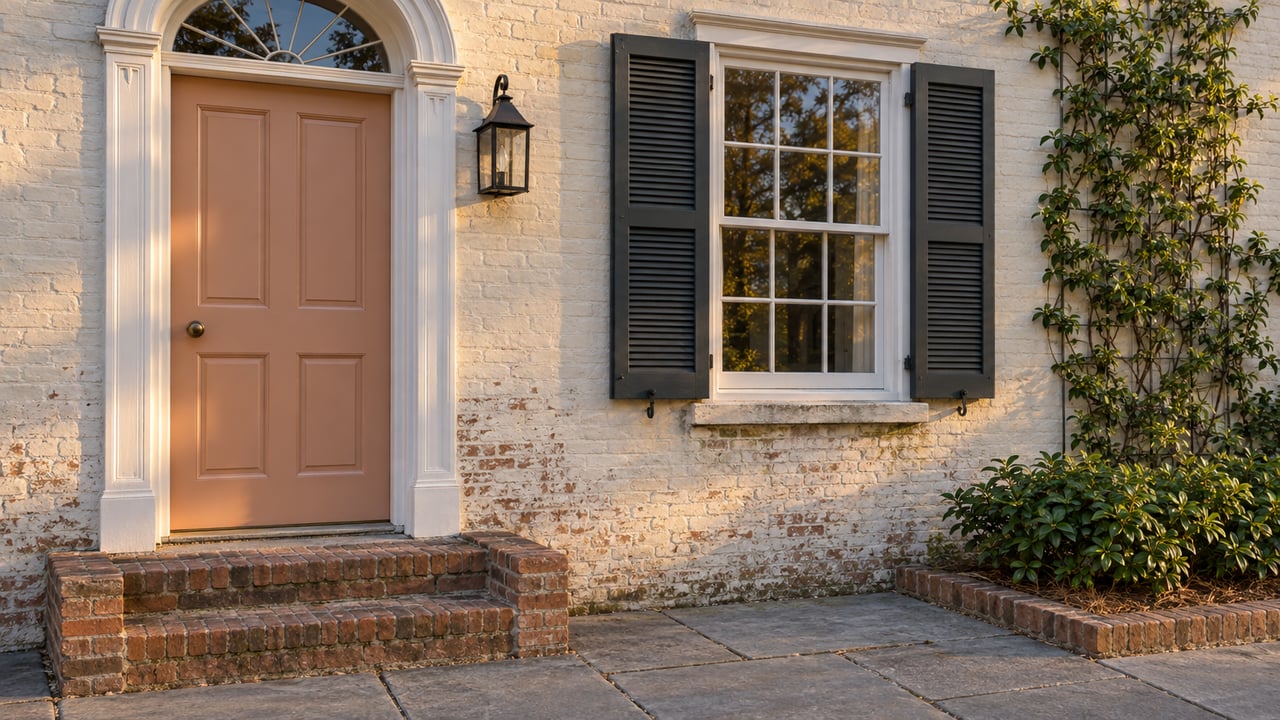
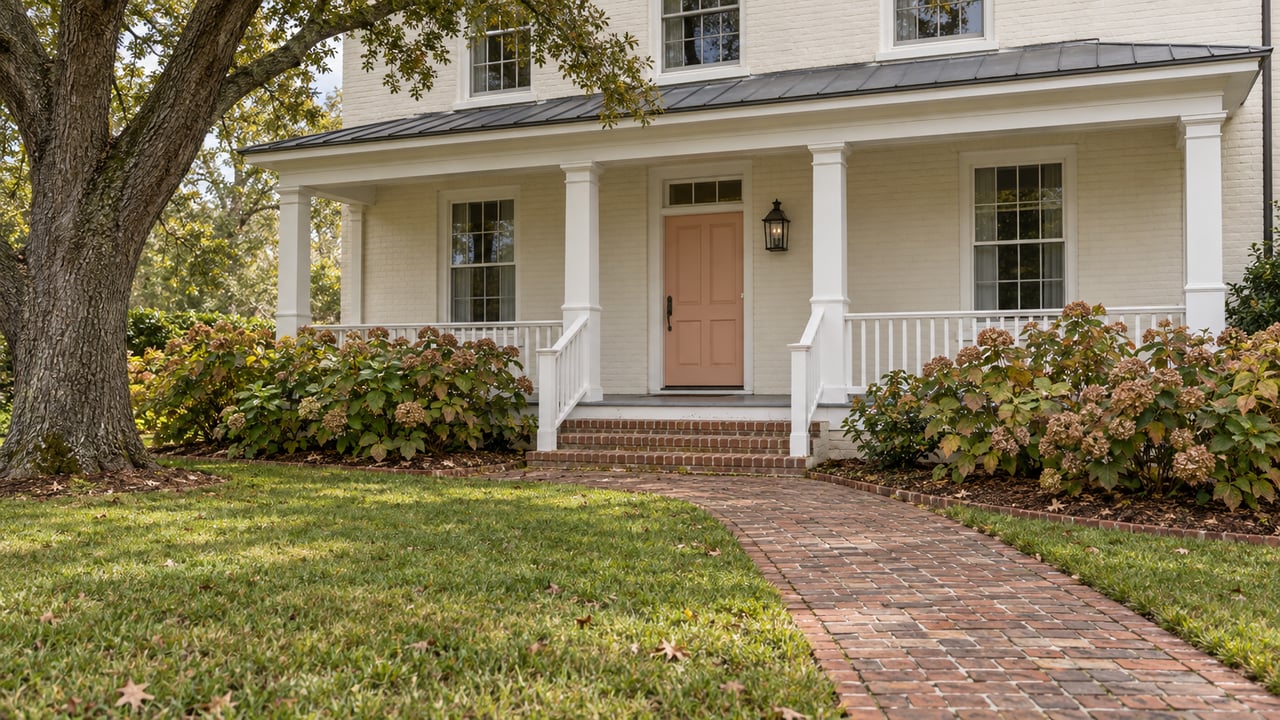
The historic stock centers on the classic Sullivan's Island "cottage" — vernacular frame houses, often single-story or set on low foundations, with deep wraparound screened porches positioned to catch the harbor cross-breezes, wide-plank floors, and metal roofs built to shed Lowcountry rain fast. You'll also find gabled "ell" plans and bungalows whose asymmetric layouts were designed to move light and air through the house before air conditioning existed.
New construction works within hard limits, and the most important one is the 38-foot height cap. That single rule is why you won't see towering mega-mansions here. Instead, luxury builders lean into elevated coastal design: homes raised on pilings to meet Base Flood Elevation requirements, with the structural underside masked by landscaping, horizontal louvers, or decorative lattice. Materials are chosen to age well in salt air rather than gleam — cedar shingles, fiber-cement siding, standing-seam metal roofs, and natural stone that develops a patina over time. The result is a streetscape that feels cohesive even as individual homes range from 1920s cottages to architect-designed contemporary builds.
Schools & Education
For an island this small, the educational options are genuinely strong, all under the Charleston County School District.
The centerpiece is Sullivan's Island Elementary (SIES), a partial-magnet school of roughly 500 students from Pre-K through 5th grade. It sits directly on the oceanfront in a 74,000-square-foot building elevated to "treetop level" to manage flood risk, with windows opening toward the Atlantic. Its "learning by the sea" philosophy runs through the curriculum — there are marine-life aquariums in the building, and students take part in programs like Seeds to Shoreline, cultivating and transplanting cordgrass to restore local marshlands. It's the kind of school families relocate for.
Older students cross the bridge into Mount Pleasant and beyond. Most feed into Moultrie Middle School, then on to Wando High School or Lucy Beckham High School depending on zoning, both well-regarded for AP programs and athletics. The area also offers two standouts available by application: Academic Magnet High School in North Charleston, regularly ranked among the very top public high schools in the country, and the Charleston School of the Arts, a 6–12 magnet pairing rigorous academics with specialized arts majors. Charter options like East Cooper Montessori round out the choices.
Dining, Shopping & the Village District
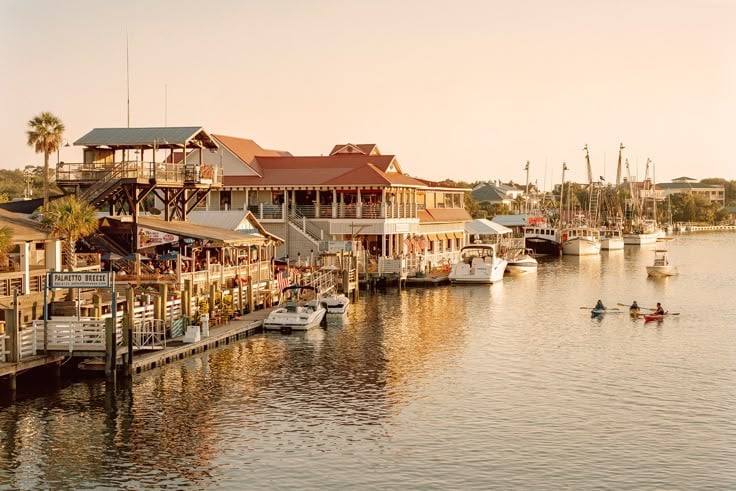
The Village District along Middle Street is the island's commercial heart, and it punches well above its size. True to the anti-commercial ethos, there are no strip malls or franchises — just a walkable cluster of independent restaurants and small boutiques. The vibe everywhere is "beach-casual but upscale": you can arrive straight from the sand, but the kitchens and bar programs are serious.
A few anchors define the scene. The Obstinate Daughter is the island's culinary crown jewel, a Southern-leaning trattoria known for wood-fired pizzas, handmade pasta, and a fresh raw bar. Poe's Tavern — named for Edgar Allan Poe, who was stationed at Fort Moultrie — is the high-energy neighborhood institution, famous for literary-themed gourmet burgers and a porch built for people-watching. Sullivan's Fish Camp handles ultra-fresh dayboat seafood and frozen cocktails, Home Team BBQ draws crowds for smoked wings and its "Gamechanger" frozen drink, The Longboard leans coastal and light, and Dunleavy's Pub remains the beloved family-owned Irish spot for a pint and live music.
Retail is intentionally small. Tucked between restaurants you'll find curated coastal decor, resort wear, local art, and jewelry. For everyday essentials, residents simply hop over to Mount Pleasant — a deliberate arrangement that keeps the island's commercial footprint as light as possible.
Things to Do: Beach, Recreation & Outdoor Life
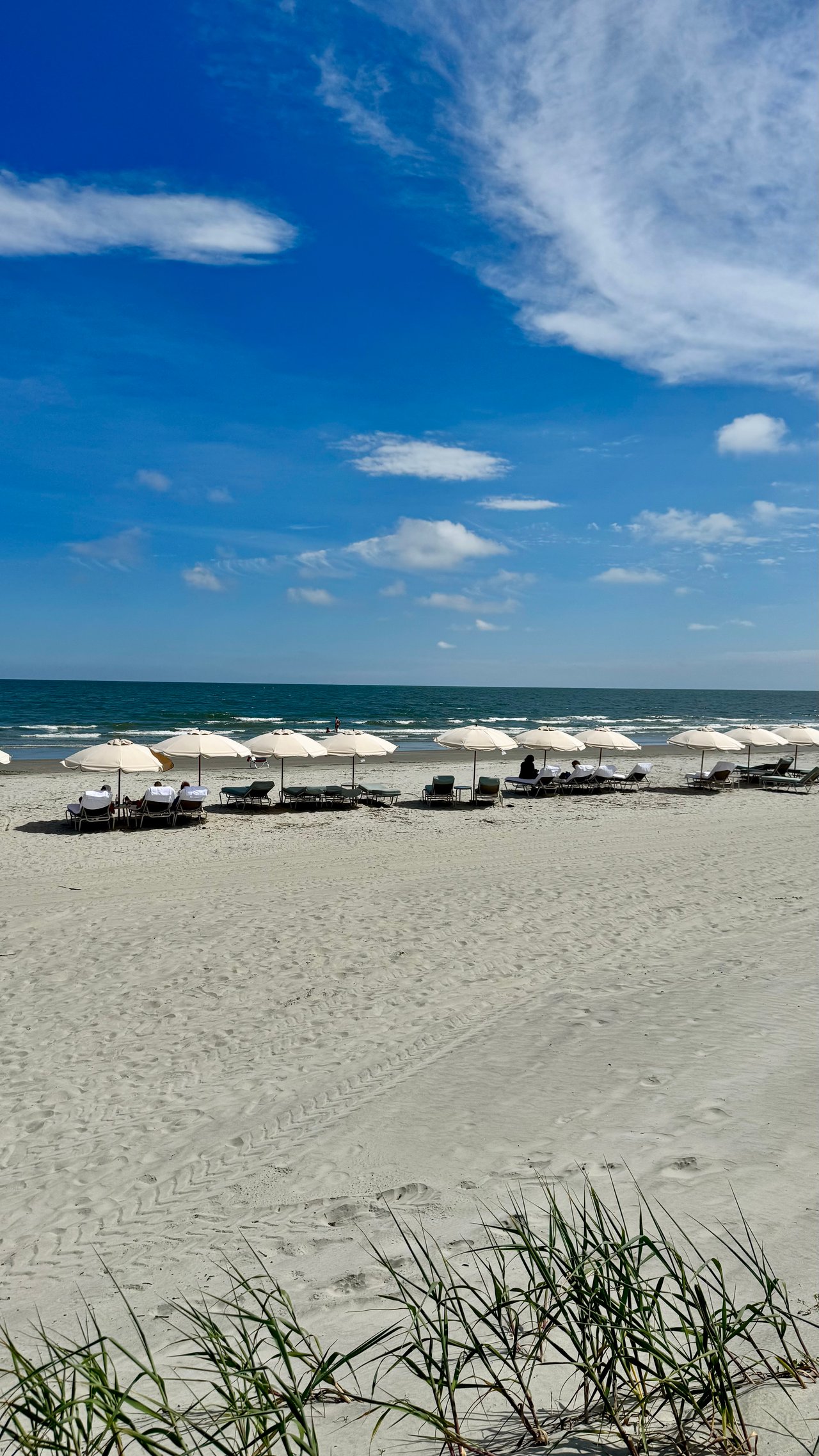
Outdoor life here is defined by what's not allowed as much as what is. The town bans commercial beach activity — no chair rentals, no beachfront bars, no motorized watercraft launching from the strand — which keeps the shoreline feeling pure and uncrowded.
The beaches themselves are wide and dynamic, fringed by sea oats and protected dunes. Because of the island's position at the harbor mouth, sand actually builds over time, so the walk from the Station paths to the waterline can be generously wide even at high tide. At the island's northern tip, Breach Inlet separates Sullivan's from Isle of Palms. Swimming there is strictly forbidden because of dangerous hidden undertows, but it's the premier spot for surf fishing, dolphin watching, and sunset photography.
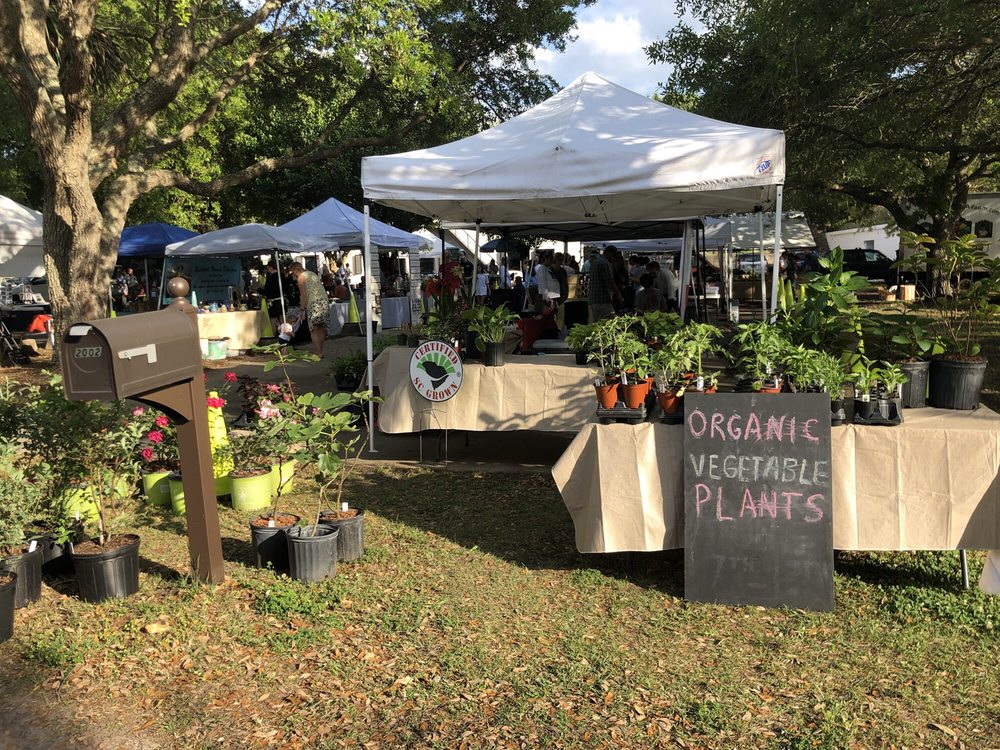
History is woven into the recreation. Fort Moultrie, run by the National Park Service, lets visitors walk through bunkers and stand among coastal-defense cannons looking out toward Fort Sumter. The triangular black-and-white Charleston Light (the Sullivan's Island Lighthouse) anchors the eastern end above the maritime forest. For active days, J. Marshall Stith Park offers tennis and pickleball courts, a basketball court, soccer field, and the gazebo that hosts farmers markets and community events. The Maritime Forest Nature Trail runs about two miles through live oaks and palmettos between the lighthouse and Fort Moultrie — prime birdwatching territory — while the calm tidal creeks on the island's back side are ideal for paddleboarding, kayaking, and crabbing.
Getting Around: Connectivity to Mount Pleasant & Downtown Charleston
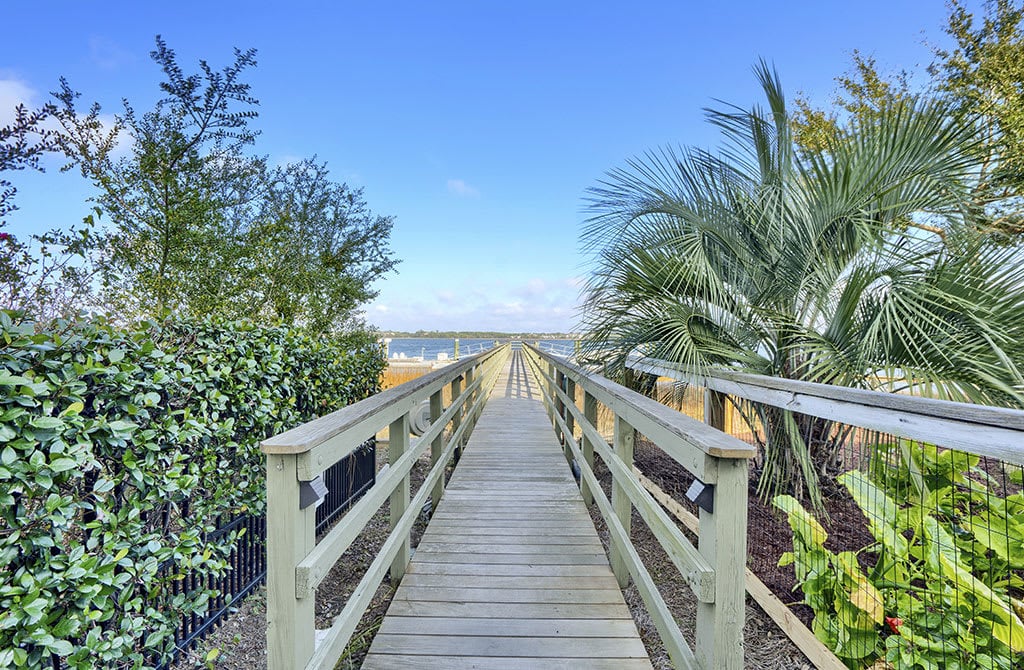
One of Sullivan's Island's best-kept selling points is how connected it is despite feeling remote. Two bridges serve the island. The historic Ben Sawyer Bridge (SC-703), a swing bridge over the Intracoastal Waterway, links directly to Mount Pleasant and drops you onto Coleman Boulevard's restaurant and shopping corridor. The smaller Breach Inlet Bridge connects the northern tip to Isle of Palms, giving easy access to the IOP Marina, groceries, and Wild Dunes.
For commuters, the geography is forgiving. Downtown Charleston is 15–20 minutes via Mount Pleasant and the Arthur Ravenel Jr. Bridge, putting MUSC's medical campus, King Street, and the historic district within easy reach. Charleston International Airport and the Boeing facilities sit about 25–30 minutes away via I-526.
Once you're on the island, though, the car often stays parked. At just 3.5 flat miles, daily movement runs on street-legal golf carts and bicycles. A dedicated bike-and-pedestrian path even runs alongside Ben Sawyer Boulevard, so residents can pedal safely between the island and Mount Pleasant.
Island History: Fort Moultrie, the Lighthouse & Revolutionary War Roots
Long before it was a luxury enclave, Sullivan's Island was a strategic military point — and the site of one of the Revolutionary War's most important early victories.
On June 28, 1776, just days before the Declaration of Independence, a British fleet of nine warships under Commodore Sir Peter Parker attacked an unfinished fort commanded by Colonel William Moultrie. The fort had been hastily built from soft, spongy palmetto logs and sand. Rather than splintering, the palmetto logs absorbed the cannon fire, with cannonballs sinking harmlessly into the wood. The outgunned Patriots held the harbor and scored a defining morale victory. That battle is why South Carolina is the "Palmetto State," why the palmetto sits at the center of the state flag, and why June 28th is still celebrated locally as Carolina Day.
The fort was renamed Fort Moultrie and rebuilt repeatedly over the next two centuries. It played a role in the bombardment of Fort Sumter at the start of the Civil War and later endured a federal siege. In the late 1820s, a young Edgar Allan Poe served here under a pseudonym; the island's moody winter landscape inspired The Gold-Bug. The fort stayed active through World War II, scanning for German U-boats, and today is the only site in the American coastal-defense system chronicling the full 171-year arc of seacoast fortification.
The island's other landmark, the Charleston Light, was completed in 1962 to replace the Morris Island Lighthouse. Designed by architect Jack Graham, the 140-foot triangular concrete tower was engineered to withstand 125-mph winds, repainted over time to its iconic black-and-white scheme, and fitted with an internal elevator and a beam visible more than 26 nautical miles out to sea.
Strict Zoning & Building Regulations
If you take away one thing before buying here, let it be this: Sullivan's Island has some of the most restrictive residential zoning in the country, and those rules will shape what you can buy, build, and renovate. The town's Planning Commission and Design Review Board enforce them rigorously.
The core constraints govern the size and shape of every home. No residential structure may exceed 38 feet in total height. Complex lot-coverage and "principal building factor" formulas tie a home's maximum square footage directly to its lot size, preserving green space and breathing room between neighbors. And the entire island is zoned for single-family use only — no duplexes, townhomes, condos, or apartment complexes exist within town limits.
Historic preservation adds another layer. Dozens of homes carry historic "Island Cottage" or landmark status. A designated property cannot be demolished, and any structural change faces intense DRB review. To reward preservation, the town offers zoning flexibility — minor setback or coverage variances — to owners who restore rather than rebuild.
Finally, because the whole island sits in a high-risk federal flood zone, all new construction and any "substantial improvement" (renovations exceeding 50% of market value) must meet FEMA floodplain rules, with the lowest finished floor elevated above Base Flood Elevation. The town even limits contractor hours to protect residents' peace — weekday and limited Saturday windows only, with no commercial work on Sundays or major holidays. For buyers, the practical takeaway is to budget realistic timelines for any planned renovation and to confirm a property's designation status before falling in love with a remodel idea.
Short-Term Rental Restrictions
This section deserves close attention from any buyer thinking about rental income, because Sullivan's Island is among the hardest short-term rental markets in the Southeast to operate in by design. The town treats a high concentration of transient visitors as a threat to its neighborhood culture and enforces accordingly.
The legal line is sharp. Any rental shorter than 28 consecutive nights counts as a short-term rental, and the town caps the total number of short-term rental permits allowed island-wide. Because compliant owners renew their permits automatically, that cap is essentially always full. A buyer hoping to close and immediately list on Airbnb or VRBO is realistically looking at a multi-year waitlist with no guarantee of ever receiving one.
For the few who hold valid licenses, oversight is strict. Occupancy is capped by bedroom count, with an absolute island-wide ceiling of 24 guests even for the largest estates. A "no house party" ordinance makes large gatherings, weddings, and corporate events at rentals explicitly illegal, with fines up to $500 per day and the threat of permanent license revocation. The town actively cross-references online listings against its registry, and marketing a property for fewer than 28 nights without a license — or omitting the town license number from a listing — triggers penalties immediately.
The town has also pushed back hard on fractional-ownership models that attempt to route around these rules. While courts have ruled that genuine co-owners can't be treated identically to weekly renters, the town continues amending its ordinances to close loopholes. The message from council has stayed consistent: this is meant to be a community of invested neighbors, not a rotation of vacationers. Buyers should plan to own here primarily as a residence or long-term holding, not a weekly-rental engine.
The Accreted Land & Maritime Forest
Here's a feature you won't find on most barrier islands, and it materially affects life on the island. While much of the Atlantic coast battles erosion, Sullivan's Island is accreting — steadily gaining sand and growing seaward. Its east-to-west orientation and the Charleston Harbor jetties trap sediment moving across Breach Inlet from Isle of Palms, and over the decades that buildup has created roughly 190 acres of town-owned protected land.
That land has matured into a dense maritime forest separating the island's homes from the active beach. It moves through a clear vegetation hierarchy: dune grasses and sea oats near the water, a shrub zone of wax myrtle and yaupon holly inland, then a mature canopy of live oaks, loblolly pines, and cabbage palmettos. Far from being merely scenic, this forest is the island's frontline climate defense — its root systems pump water to reduce inland flooding, and its canopy absorbs storm-surge energy and high winds.
It's also the source of the island's most spirited local debate, sometimes called the "battle of the canopy." Front-row homeowners whose ocean views have been swallowed by decades of forest growth have clashed with conservationists and interior residents. The town, in partnership with the Lowcountry Land Trust, manages the land under strict deed restrictions and tightly defined "pruning and cutting zones" that allow narrow view corridors and invasive-species control while protecting the forest's overall integrity. For oceanfront buyers especially, it's worth understanding exactly what view rights a property does and does not carry before you purchase.
Flood Zones, Elevation & Coastal Insurance Considerations
No one should buy on Sullivan's Island without understanding flood mapping, elevation, and the layered insurance market — these factors drive both your building obligations and your annual carrying costs.
FEMA divides the island into risk zones via its Flood Insurance Rate Maps:
| Flood Zone |
Risk Level |
What It Means |
| VE |
High (coastal velocity) |
Immediate oceanfront, subject to wave action; highest premiums; homes built on open breakaway pilings |
| AE |
High (100-year floodplain) |
Much of the interior; 1% annual flood chance; flood insurance required on federally backed mortgages; must meet BFE heights |
| X (shaded/unshaded) |
Moderate-to-low |
Outside the 100-year zone; insurance not federally mandated, but prudent owners carry it anyway |
A property's Elevation Certificate — a surveyor's measurement of the home's height relative to Base Flood Elevation — often determines its insurance economics. Newer homes built above BFE, or historic cottages mechanically lifted onto engineered foundations, enjoy far lower premiums. The town also enforces "freeboard" rules requiring new builds to sit 1–2 feet above FEMA minimums, baking a safety margin into the design.
Insuring a home here typically means assembling three layers. Flood coverage comes through the NFIP — and because the town earns Community Rating System credit for its floodplain management and protected land, residents get a meaningful discount — but NFIP caps building coverage at $250,000, so luxury owners add private excess flood insurance to cover full value. Wind and hail is a separate policy, since standard homeowners coverage excludes hurricane and high-wind damage; it often runs through the state Wind Pool or surplus-lines insurers with percentage-based deductibles (commonly 2%–5% of insured value rather than a flat figure). Finally, FEMA's Risk Rating 2.0 now prices premiums on individualized property risk rather than broad zones, which means older un-elevated homes face steep increases — and makes structural elevation one of the most financially rewarding renovations an owner can make.
Find Your Home on Sullivan's Island
Sullivan's Island rewards buyers who understand it before they bid — the zoning, the rental rules, the flood and insurance picture, and the genuine differences between an oceanfront lot behind the maritime forest and a Village District cottage steps from Middle Street. That local knowledge is exactly what we bring to the table.
At Island House Real Estate, we pair a warm, listen-first approach with tireless effort on your behalf. Founded by Tricia Peterson — a former physical therapist of 15 years who has spent her real estate career helping clients make smart, informed decisions, and who's consistently recognized among the top 1% of Charleston agents — our team treats every client, whether buying a first home or a multi-million-dollar estate, with the same care, discretion, and strategic focus. We're advocates, not salespeople: we educate you so you can maximize your investment and minimize your risk in a market as unique as this one. Many of our clients come to us relocating from out of state, and we make that move feel seamless. When you're ready to explore Sullivan's Island, reach out at (843) 847-1762 or [email protected], and let's find the home to house the life you love.