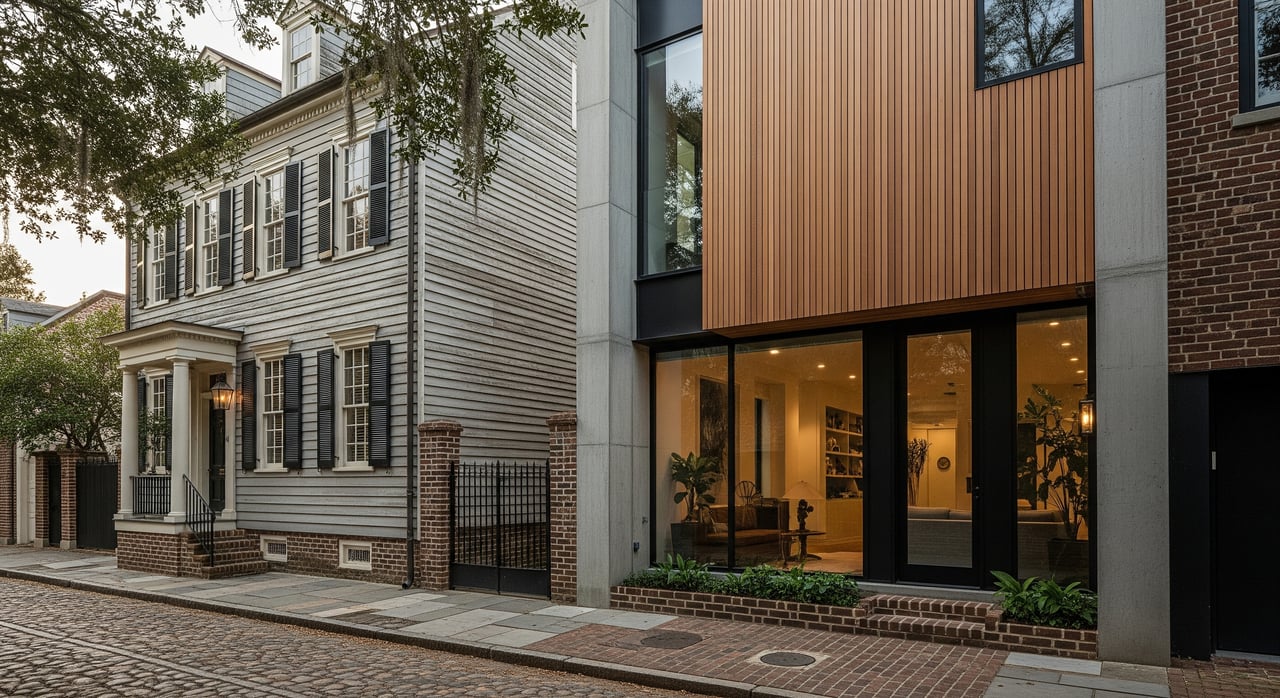
Torn between the charm of a historic Charleston single and the ease of a new townhome in Cannonborough-Elliotborough? You are not alone. Many relocating professionals love the character of downtown, but want predictable costs and low-maintenance living. This guide walks you through the real tradeoffs so you can choose confidently. Let’s dive in.
Historic vs new at a glance
- Historic homes offer original details, porches, and established streetscapes with strong neighborhood character. You should plan for more maintenance and exterior review for changes.
- New homes and infill townhouses deliver modern systems, energy efficiency, and often better parking solutions. You trade some historic authenticity for convenience and predictability.
- In Cannonborough-Elliotborough, both options exist on walkable blocks near downtown amenities.
What BAR rules mean for you
What BAR reviews
Charleston’s Board of Architectural Review (BAR) oversees exterior changes in designated historic districts. This can include visible siding, windows, doors, porches, additions, and new construction. Demolition requires documentation and is often discouraged. Interior work is generally outside BAR review unless tied to exterior alterations.
Timelines and approvals
Expect additional lead time compared with non-historic areas. Many projects involve a pre-application consult, concept review, and final review. Allow weeks to months for planning and potential revisions. Working with architects and contractors experienced in Charleston’s process usually speeds decisions and improves outcomes.
Common constraints
You may not be able to add a new curb cut or visible front garage. Window replacements that change the exterior look can be denied or require custom solutions. Rooftop elements like dormers or solar are more likely if they are not visible from the public right of way.
Incentives to explore
Federal historic tax credits apply mainly to income-producing properties, not most owner-occupied primary residences. State and local programs vary over time. If you are considering preservation work on a rental or commercial property, confirm current programs with city staff and the state historic preservation office before relying on any incentive.
Features and upkeep differences
Historic home traits
In Cannonborough-Elliotborough, many historic homes feature wood clapboard siding, raised foundations or piers, heart-pine floors, and single-pane windows. Porches, or “piazzas,” are common. These materials require routine painting, caulking, and careful repair to maintain the home’s character. Older plumbing, wiring, and roof systems may need modernization.
New construction traits
New builds and recent infill typically include modern foundations, better insulation, air sealing, and high-efficiency HVAC and electrical systems. You get lower short-term maintenance and fewer unknowns. Builder and manufacturer warranties can add peace of mind for the first years of ownership.
What it means for you
Historic homes demand specialized trades and preservation-minded carpentry, which can cost more than standard work. Major visible changes may face review. If your priority is lower upkeep and predictable costs, new construction offers a smoother path. If you value authenticity and are ready for thoughtful stewardship, historic homes reward you with one-of-a-kind character.
Parking and mobility
On-site parking realities
Many older lots were platted before cars and lack front-facing driveways or garages. Some properties have rear alley access or small side parking. New infill and townhomes often include rear garages or dedicated pads, but placement and visibility can still be constrained by design review.
Street parking and transit
Downtown offers a mix of metered street parking, residential permit zones, and city-managed lots. Availability varies by block and time of day. The tradeoff is strong walkability to restaurants, shops, universities, and the medical corridor. For some professionals, this reduces daily car use and makes short walks a welcome part of living downtown.
Energy and lock-and-leave
Energy gaps in historic homes
Single-pane windows, limited cavity insulation, and older HVAC can mean more heat gain and humidity challenges in Charleston’s climate. Exterior changes that affect the look of the home can trigger review, which may limit some options.
Practical upgrades that work
You can improve performance without altering the façade. Common steps include attic and roof insulation, selective blown-in insulation where feasible, insulated interior storm windows, and high-efficiency HVAC or ductless mini-splits. Tankless or heat-pump water heaters are practical upgrades. Solar can be possible if sited away from public view. Confirm feasibility early in your planning.
True lock-and-leave options
Newer condos and townhomes often provide the easiest lock-and-leave lifestyle. In a single-family historic home, you can get close with reliable modern HVAC, smart thermostats, leak sensors, remote monitoring, and a local property care plan. Expect to stay proactive about exterior painting, wood maintenance, and routine inspections.
Humidity and comfort
Charleston’s humidity requires attention to ventilation, dehumidification, and correct HVAC sizing. Proper air sealing, balanced ventilation, and moisture barriers protect your comfort and the building materials. This is especially important in older structures where moisture can linger.
Cost, insurance, resale
Total cost to own
Historic properties may command premiums for location and character. Budget for higher routine maintenance and potential system upgrades. Newer homes might have a higher price per square foot if finishes are high end, but their maintenance reserves are typically lower early on.
Flood and wind insurance
Parts of downtown are in FEMA flood zones. Lenders often require flood insurance if the property is in a mapped floodplain. Elevation and floodproofing affect premiums. Wind and hurricane coverage can also be higher for older roofs or non-compliant construction. Historic homes sometimes face higher replacement-cost exposures because of specialty materials and skilled labor.
Renovation triggers
Significant renovations can trigger building-code upgrades for electrical service, energy measures, or accessibility. In flood zones, substantial improvements may require elevation. These rules affect budgets and timelines, so confirm scope before you close or begin work.
Resale profiles
Historic charm draws preservation-minded buyers and design enthusiasts. Thoughtfully renovated historic homes and quality new infill appeal to a broader set of buyers who want turnkey convenience. Highly original historic homes may attract a narrower but passionate pool.
Financing basics
Financing is available for both historic and new homes, but condition and insurability matter. Renovation loans can help when updates are needed. Appraisals and underwriting will factor in comparable sales and perceived risks.
Which fits your lifestyle
- Choose a historic home if you value unique architecture, porches and piazzas, and established streetscapes. You are willing to plan for maintenance, consult with design reviewers, and steward original materials.
- Choose new construction if you want modern comfort, lower short-term upkeep, greater energy performance, and easier lock-and-leave living. You may gain more predictable parking and systems with fewer surprises.
- If you travel often, a newer condo or townhome is typically the simplest. If you love authenticity and will invest in smart upgrades and local support, a historic single can still deliver an easy downtown lifestyle.
Buyer checklist
- Confirm whether the property falls under the Board of Architectural Review and request any recent approvals from the seller.
- Get a current survey. Verify alleys, easements, and any assigned parking.
- Check FEMA flood maps and local floodplain designations. Obtain an elevation certificate if needed.
- Ask for roof age, HVAC age, recent structural work, and pest or termite reports.
- Request recent insurance premiums, including wind and flood endorsements.
- Hire a home inspector experienced with historic buildings and coastal conditions.
- If exterior changes are planned, consult an architect or contractor experienced with Charleston BAR early.
- For lock-and-leave living, list required upgrades such as smart controls, HVAC redundancy, and property checks. Price them before closing.
Local resources
- City of Charleston Planning Department and Board of Architectural Review
- Charleston County GIS and Assessor for parcel data and tax records
- FEMA Flood Map Service Center and local floodplain administrator
- South Carolina State Historic Preservation Office for designation and incentives guidance
- Historic Charleston Foundation and local preservation groups for context and referrals
- Local architects, preservation contractors, inspectors, surveyors, and insurance agents experienced with the peninsula
Next steps
Every block of Cannonborough-Elliotborough is a little different. The right choice comes down to your timeline, tolerance for maintenance, and how you want to live day to day. If you want seasoned guidance on specific streets, renovation potential, or insurance realities, connect with a local advisor who navigates these decisions every week.
If you are weighing a historic single versus a new townhome, we can help you model costs, plan upgrades, and secure off-market insights. Start a private conversation with Tricia Peterson to map your next steps. Find Your Island — Schedule a Private Consultation.
FAQs
Can I add a garage in Cannonborough-Elliotborough?
- Possibly, but location and visibility are regulated in historic areas. Expect rear placement requirements and BAR review for any visible garage or new curb cut.
How long does BAR approval usually take?
- Timing varies by scope. Plan for weeks to months that include consultation, concept review, and final review, especially if revisions are needed.
Are solar panels allowed on historic homes?
- Often yes if panels are sited to minimize visibility from public streets. Confirm policy early and plan placement on rear roof planes when possible.
Do historic homes flood more often downtown?
- Flood risk is parcel specific. Raised historic homes can perform well, but check FEMA maps, elevation, and local flood history before you buy.
Is insurance more expensive downtown?
- Flood and wind coverage can add noticeable cost, particularly for older roofs or homes in mapped flood zones. Obtain quotes early in the process.
Can a historic home be low maintenance for travel?
- Yes with planning. Modern HVAC, smart monitoring, moisture control, and a local property care plan can make a historic single close to lock-and-leave.