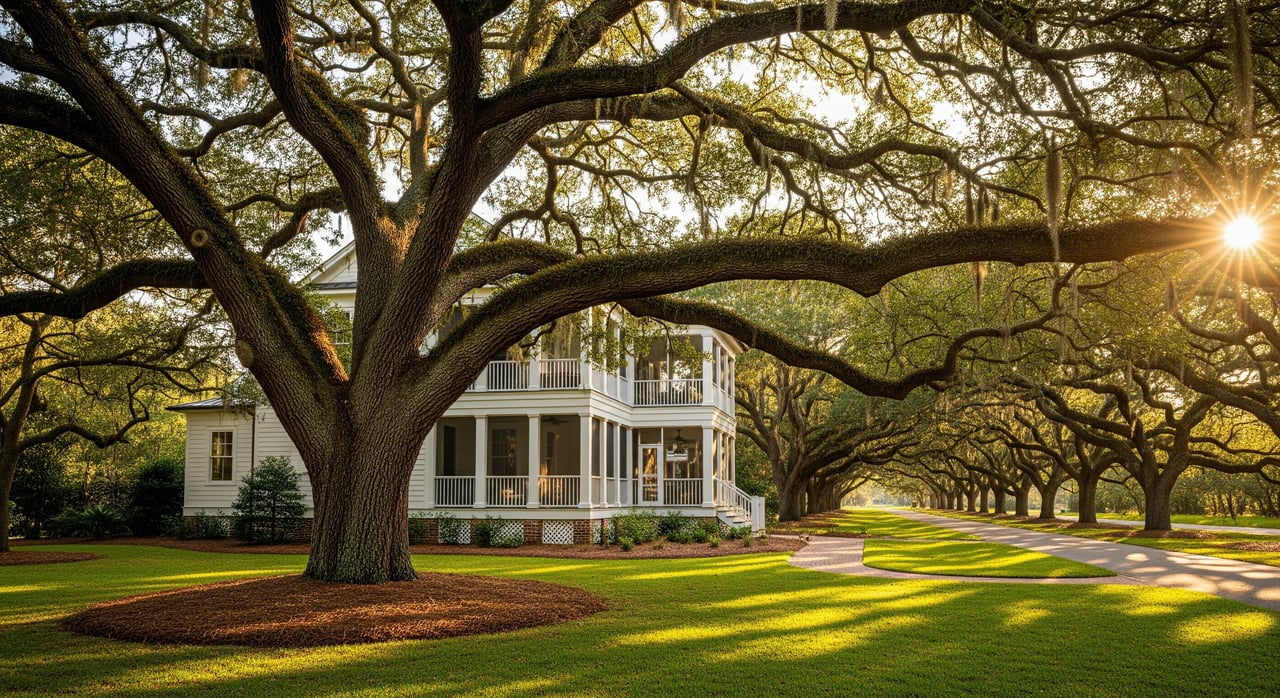
Live oaks are part of Summerville’s charm, but knowing how to care for them can feel daunting. You want shade, beauty, and value without risking roots, limbs, or local permit issues. In this guide you’ll learn where to plant, how to water and mulch, when to prune, how to protect trees during projects and storms, and what Summerville’s rules require. Let’s dive in.
Why live oaks thrive here
Summerville’s warm, humid climate supports southern live oak, Quercus virginiana, a long‑lived, broad‑spreading evergreen that suits large yards and streetscapes. It tolerates coastal conditions once established and develops a wide canopy that adds timeless curb appeal. You are in USDA hardiness zones 8b to 9a, so choose planting and care that fit those ranges. See species specifics in Clemson’s live oak overview for growth habit and best practices.
- Learn more about USDA zones for Summerville at PlantMaps hardiness zones.
- Review live oak basics with Clemson HGIC’s live oak factsheet.
Pick the right spot
Know your soils
Much of Dorchester County features well‑drained sandy to sandy‑loam soils on uplands, with lower areas that drain poorly or flood seasonally. Live oak does best in well‑drained sites and tolerates short wet periods, but persistent saturation is stressful. If you are unsure about drainage, check the local soil survey for indications of high water tables and flood‑prone map units. The Dorchester County survey is available through NRCS soil survey resources.
Give roots room
Live oaks need horizontal space. Avoid planting closer than the mature crown radius to homes, driveways, sidewalks, or utilities. Expect roots to extend well beyond the drip line. When planting, set the root crown at or slightly above grade and keep the trunk flare visible. Avoid burying the trunk or piling soil around it.
Planting and early care
Planting basics
Handle the root ball carefully and keep the root flare exposed. Backfill with native soil, then water to settle. Do not plant in persistently wet spots. If space is tight, consider smaller live oak cultivars that still offer the look without the full spread.
Watering schedule
New trees need consistent moisture while they establish. Depending on size and weather, plan for regular irrigation in the first growing season. After establishment, water deeply but less often during extended dry spells rather than frequent shallow watering. See research‑backed guidance on establishment watering from UF/IFAS woody plant irrigation.
Mulch to protect roots
Apply 2 to 4 inches of organic mulch, extending toward the drip line where possible. Pull mulch a few inches back from the trunk to avoid rot and pest issues. Mulch moderates soil temperature, holds moisture, and protects roots from lawn equipment. For details, review Clemson’s mulch guidance.
Fertilize with purpose
Test your soil before fertilizing. Mature live oaks rarely need routine fertilizer unless a deficiency is confirmed. Younger trees benefit from targeted, slow‑release products applied over the root zone and watered in. Avoid overfertilizing, which can push weak growth. See best practices in Clemson HGIC tree maintenance.
Smart pruning in Dorchester County
Early structural pruning builds strong scaffold branches and reduces future issues. For mature trees, remove dead, damaged, or hazardous limbs as needed. Limit live canopy removal to roughly 25 to 30 percent in a single year and use proper branch‑collar cuts. Large or high work is best handled by an ISA‑certified arborist. Find technique basics in Clemson HGIC tree maintenance.
Timing matters
Oak wilt is a lethal oak disease in parts of the South, though confirmed cases have been limited in South Carolina and are historically rare in coastal counties. Because guidance on pruning windows varies by region and pest activity, check current recommendations with Clemson Extension and the Town arborist. Emergency hazard pruning is appropriate any time for safety. For disease and pest awareness, review Clemson HGIC’s oak diseases and insect pests.
Common issues to watch
Most problems you will see are cosmetic. Leaf blister and many insect galls look alarming but seldom harm the tree. Scale insects can lead to sooty mold, and borers are more likely on stressed trees. Spanish moss and mistletoe are epiphytes, but heavy loads can add shade and weight to limbs. Learn identification tips in Clemson’s oak diseases and insect pests guide.
Protect trees during projects and storms
Construction and roots
Most live oak roots sit in the top 12 to 24 inches of soil and extend beyond the canopy. Before work begins, fence the drip line, avoid trenching or grade changes, and keep heavy equipment and materials off the root zone. For best practices, see the South Carolina Forestry Commission’s urban tree care resources.
Utilities and hardscape
Plan driveways, walks, and lines to avoid major roots. Coordinate with utility locators before you dig. The Town of Summerville requires tree protections in certain site plans, so incorporate tree protection early in design.
Storm prep and risk
Regular structural pruning by a professional reduces wind risk by removing deadwood and weak crotches. If a large limb fails or a tree is compromised, hire a pro for safe removal. Always check local permit rules before removing a significant tree.
Permits and local help
Summerville protects its urban forest. Removal permits are required for trees 8 inches DBH and larger, and removals of 16 inches DBH or more are reviewed by the Tree Protection Board. Contact the staff arborist for guidance, permits, and community tree programs by visiting the Town’s Tree Ordinance and removal permits page.
Clemson Extension’s HGIC offers South Carolina‑specific guidance on live oaks, pests, planting, and pruning. The South Carolina Forestry Commission provides additional urban forestry resources and construction‑phase protection best practices. Start with Clemson’s live oak factsheet and the SCFC’s urban tree care resources.
Quick care checklist
- Choose a well‑drained site and give roots room to spread.
- Water new trees regularly through the first season, then water deeply during dry spells.
- Mulch 2 to 4 inches deep, keeping mulch off the trunk.
- Prune for structure when young and remove dead or hazardous wood as needed. Hire an ISA‑certified arborist for large work.
- Fence the drip line before construction and avoid soil compaction.
- Check Summerville permits before removing or significantly pruning large trees.
Caring well for your live oaks protects your home’s shade, beauty, and long‑term value. If you are weighing improvements before selling or want help prioritizing curb appeal projects, reach out to Tricia Peterson for local guidance and trusted vendor introductions.
FAQs
When should I prune a live oak in Summerville?
- Many experts suggest pruning during lower pest‑activity seasons, but timing varies by region and risk. Check current guidance with Clemson Extension and the Town arborist, and address hazardous limbs immediately for safety.
Do I need a permit to remove a large tree in Summerville?
- Yes. The Town requires removal permits for trees 8 inches DBH and above, and trees 16 inches DBH or larger are reviewed by the Tree Protection Board. See the Town’s Tree Ordinance and removal permits page.
How often should I water a newly planted live oak?
- Keep the root ball consistently moist during establishment, often with irrigation several times per week depending on tree size and weather. Later, water deeply and less often during extended dry periods, not daily shallow watering.
How far from my house should I plant a live oak?
- Allow at least the mature crown radius between the trunk and major structures, driveways, or sidewalks. Live oaks spread wide, and roots extend beyond the drip line.
What are the most common live oak problems in coastal South Carolina?
- Cosmetic leaf blister and insect galls are common, along with occasional scale and sooty mold. Borers target stressed trees, and Spanish moss can add weight and shade. Oak wilt is rare in coastal counties but merits awareness.