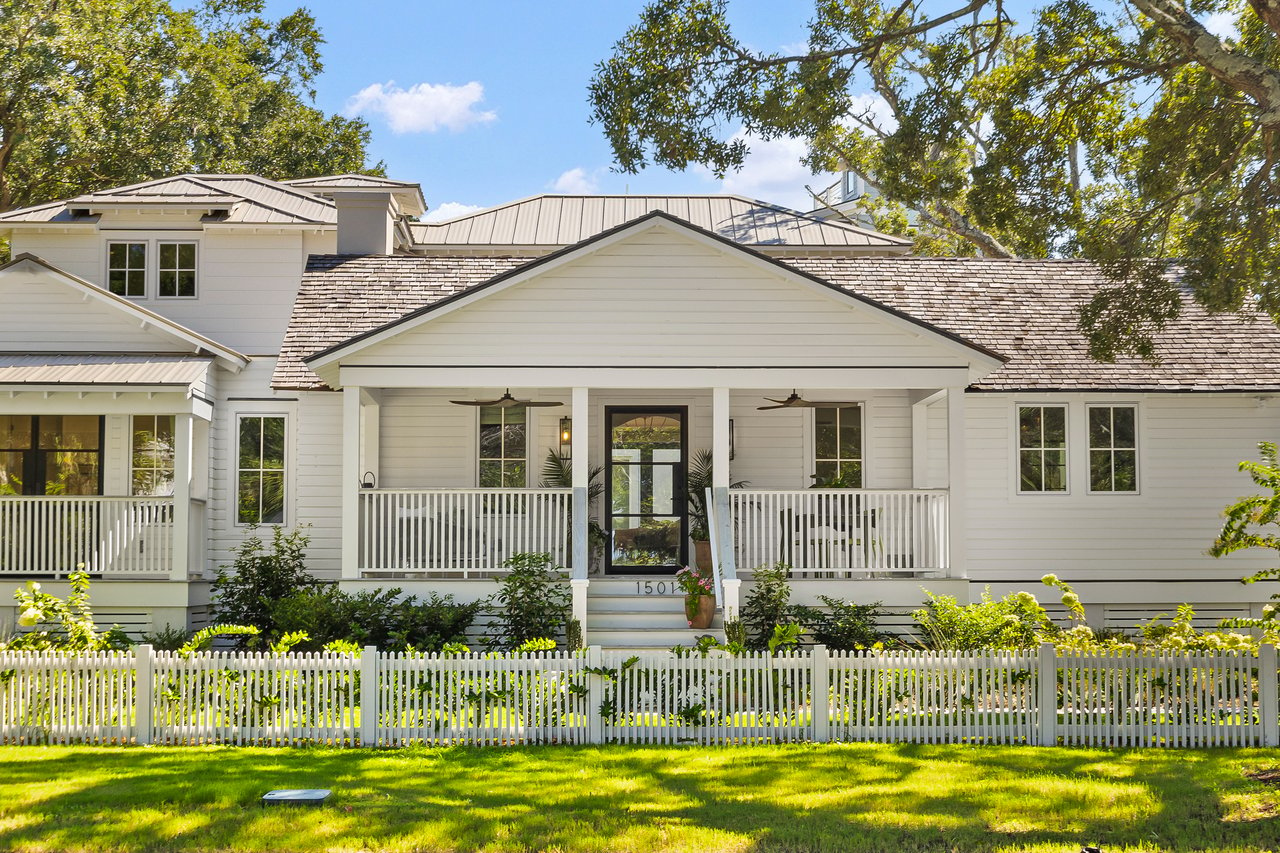
"It's the only way someone can build a second home on their property."
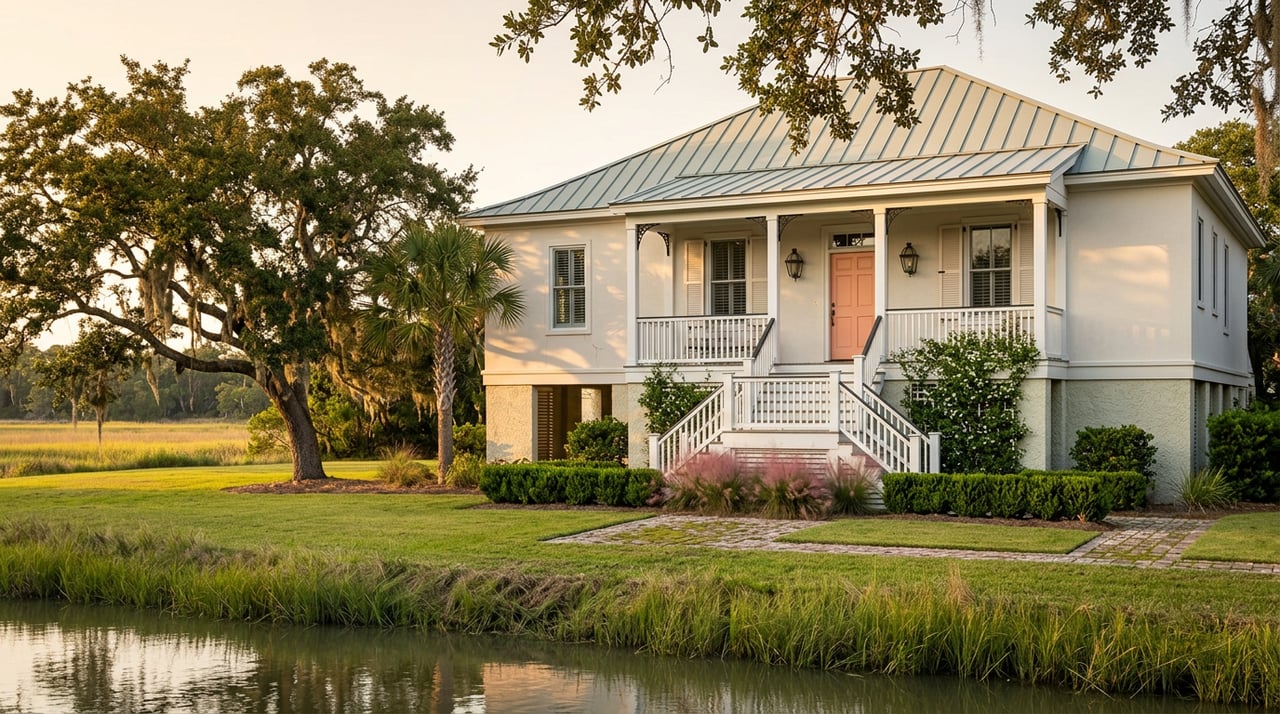
That line came from Charles Drayton, the town's planning and zoning director, describing a single ordinance that most Sullivan's Island buyers never think to ask about until they're standing in front of a cottage they assumed was a teardown. On an island with roughly 2,000 residents, a fixed shoreline, and zoning that flatly bars duplexes and multi-unit homes, there is exactly one path to a second dwelling on a residential lot: keep the small historic cottage that's already there and use it as an accessory home while you build something larger beside it.
That single classification, not lot size, not square footage of the new build, is what separates a one-house parcel from a two-house parcel on Sullivan's Island. It's a distinction most listing descriptions never mention, and it's the reason a weathered 900-square-foot cottage can be worth more intact than demolished.
The Cottage Has to Earn Its Keep
The exception only applies to a narrow category of structure. To qualify, a cottage has to be listed in the town's historic register, it has to have historically been used as a residence, and it has to come in under 1,200 square feet. Miss any one of those three and the door closes.
The town's own current Design Review Board docket makes the boundary concrete. Sitting on this month's agenda is an application to renovate and adapt the former Fort Moultrie Post Theatre building on Middle Street into a single-family home. It's a Sullivan's Island landmark property with real history attached to it, but at more than 6,000 square feet and built as a movie theater rather than a residence, it fails both tests for the cottage exception. It can become a beautiful single home. It cannot become the anchor of a two-house lot.
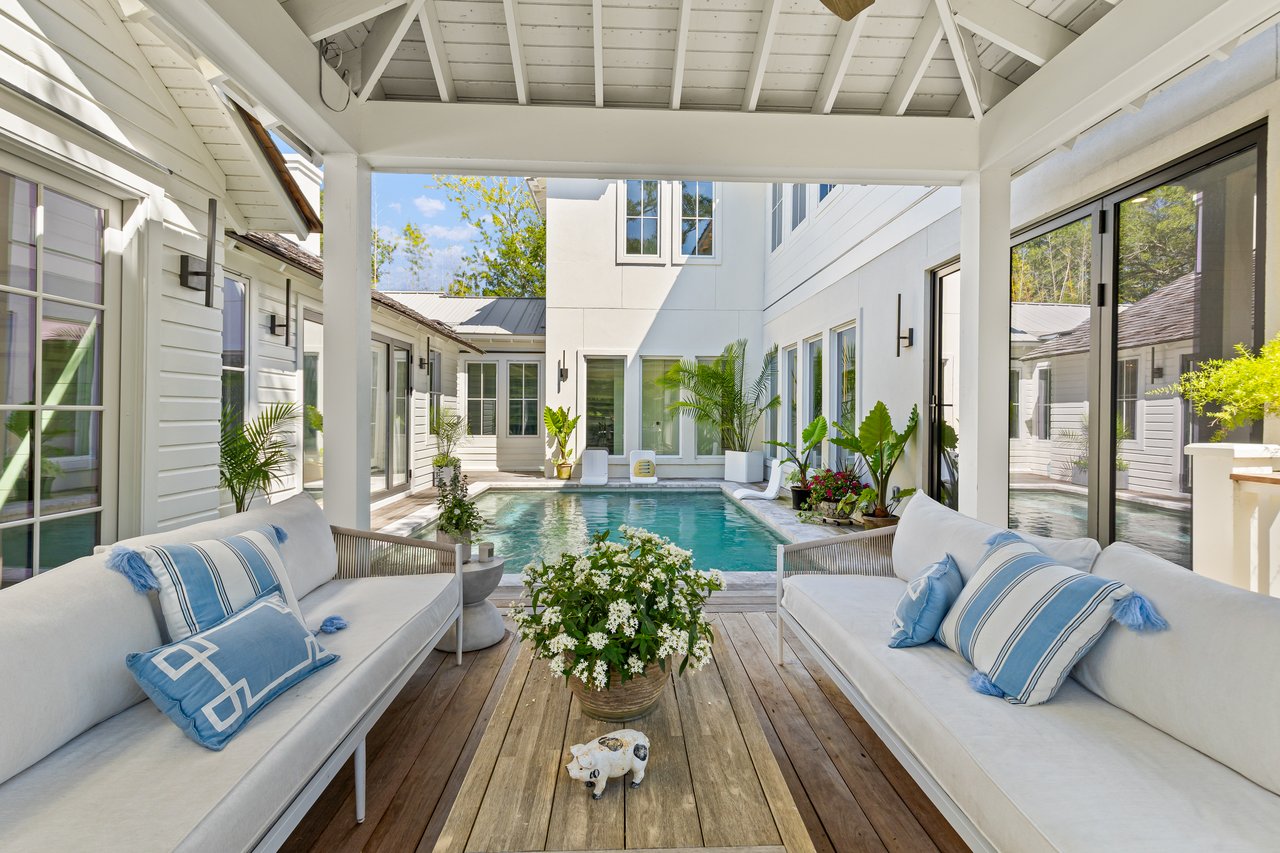
Contrast that with a project profiled by Frederic Magazine last fall: a family who restored a 1920s cottage on the island, kept its original pine beadboard walls and ceilings intact, and built a larger second home on the same lot designed by B.W. Fleming Architects, with interiors by designer Allison Abney. The cottage still functions, the new house does the heavy lifting for daily living, and the property now legally holds two structures where most Sullivan's Island lots can only ever hold one.
According to the town, there are roughly 25 properties on the entire island currently configured this way. That is the full universe of legal two-house lots created through this mechanism, and because the only way to create a new one is to already own a lot with a qualifying cottage on it, that number cannot expand much no matter how strong demand gets.
What the Design Review Board Actually Signs Off On
Owning a qualifying cottage doesn't fast-track anything. Every exterior change on a historic property, from a new main house down to a relocated pool, goes through the same Design Review Board that meets once a month, on the third Wednesday, and needs a complete application a month ahead of that date. The board has seven members appointed by Town Council and, once a hearing is held on a complete application, South Carolina's own code of ordinances gives it up to 62 days to act.
This month's applications show how wide that net is cast. Alongside the Post Theatre renovation, the board is reviewing a new parish hall at Stella Maris Church, a pool relocation and rear porch renovation at a home on Jasper Boulevard, and a garage addition on I'On Avenue. A pool move and a landmark rebuild move through the identical monthly cycle. That's useful context for anyone assuming a small addition to a cottage-and-second-home property will be quick: it won't necessarily be faster just because the project looks minor on paper.
Requirement | Qualifies | Fails the Test |
|---|---|---|
Listed in town historic register | Yes, required | Not listed |
Historically used as a residence | Yes, required | Former Fort Moultrie Post Theatre, built as a movie theater |
Under 1,200 square feet | Yes, required | Post Theatre building, over 6,000 square feet |
The Premium Shows Up Before Closing, Not on the Sign
Sullivan's Island's market already rewards documented historic status. A historic home on I'On Avenue sold for $9.45 million in a transaction reported in July 2026, ranking among the island's highest sales of the year, built originally in 1900 by the U.S. Army Corps of Engineers and restored with its original pressed tin ceilings and heart pine floors intact. Buyers at that price point are paying for verified history, not just square footage.
A different property makes the point even more directly for sellers. A former officers' hall known as Jasper Hall, sitting on a two-acre site and designated a Sullivan's Island Landmark, first came to market in 2024 for $13.95 million "as is." It came off the market in 2025 so the owners could commission a local architecture firm to research the building's history and secure design approval for a full exterior redesign before relisting. According to reporting on the relisting, the earlier version of the listing had been held back by uncertainty over what the town's Design Review Board would allow. Once that approval was in hand, the guessing game was gone, and the property returned to market at $18.5 million.
The lesson for anyone selling a historic or cottage-configured property is not subtle. A Certificate of Appropriateness in hand is worth more to a buyer than a rendering of what might be approved someday. Sellers who front-load that approval process are removing the single biggest source of buyer hesitation before a showing ever happens.
When the Paperwork Doesn't Match the Reality
Not every property with what looks like a second dwelling on it actually has the legal standing to prove it. Sullivan's Island's own reporting history includes a case involving a house on I'On Avenue where a second living space, complete with its own kitchen, bathroom, separate utility meters, and its own half-address, had been rented out for years without incident under a previous owner. When the new owner sought to have the town formally recognize it as a second home, the town's Board of Zoning Appeals declined, and a county judge upheld that decision on appeal.
A similar dispute over a different I'On Avenue property required the owners to trace the building's history all the way back to 1945 just to prove it had always been a legal duplex, a fact the town eventually accepted only after that documentation was produced.
Neither case is about the historic cottage exception specifically, but both illustrate the same underlying risk: a structure that looks like a legitimate second dwelling, and may have functioned as one for decades, is not automatically recognized as one. The town wants documentation, not just observed use. For any buyer evaluating a Sullivan's Island property with an existing accessory structure, that distinction is worth confirming before it becomes a contingency you're arguing about after inspection.
A Short Checklist Before You Write an Offer
- Confirm the cottage's historic register status using the town's Interactive Historic Resources Map rather than taking a listing description at its word.
- Pull the permit history and certificate of occupancy for any existing accessory structure, and cross-check it against town records rather than the seller's account of how it's been used.
- Ask whether the Design Review Board has already issued a Certificate of Appropriateness for any planned new construction, or whether that approval is still ahead of you.
- Verify the cottage's documented square footage. The 1,200-square-foot threshold is measured, not estimated.
- Request the property's elevation certificate. The town keeps many on file, and it will shape both your design options and your flood insurance costs.
A Few Straight Answers
Can any old cottage on Sullivan's Island become a second legal home? No. It has to be listed in the town's historic register, it has to have been used historically as a residence, and it has to be under 1,200 square feet. A large historic building that was never a home, like a former theater, doesn't qualify no matter how much character it has.
How long does Design Review Board approval typically take? The board meets monthly, applications are due a month in advance, and the board has up to 62 days to act once a complete application gets a hearing. Projects that also require flood zone or coastal permitting, or that trigger the federal 50 percent substantial improvement rule, tend to run longer.
Does this same exception exist on Isle of Palms or Folly Beach? This particular ordinance is specific to Sullivan's Island's code. Buyers comparing barrier island properties shouldn't assume a neighboring island regulates second structures the same way, and should confirm the applicable ordinance for any property they're considering, island by island.
If you're looking at a Sullivan's Island property with an older cottage on it, the question worth asking isn't whether it's worth saving. It's whether it qualifies, and what that qualification is actually worth at the closing table. That's exactly the kind of detail we walk through with clients before an offer goes in.
Find Your Island. Schedule a private consultation with Tricia Peterson at Island House Real Estate to talk through what a specific Sullivan's Island property, cottage and all, is really worth.